A real public repository task, captured at planning, execution, and review handoff in Labor0's Demo project.
Captured from Labor0's public Demo project and a public demonstration repository. Screenshots are cropped to exclude account details, private identifiers, and task transcripts.
Original engineering request
Make release readiness reviewable before a pull request ships
Turn the static release-status card into an accessible release-readiness review with a typed readiness model, deterministic rollup, responsive filters, regression coverage, documentation, full validation, and an unmerged pull request.
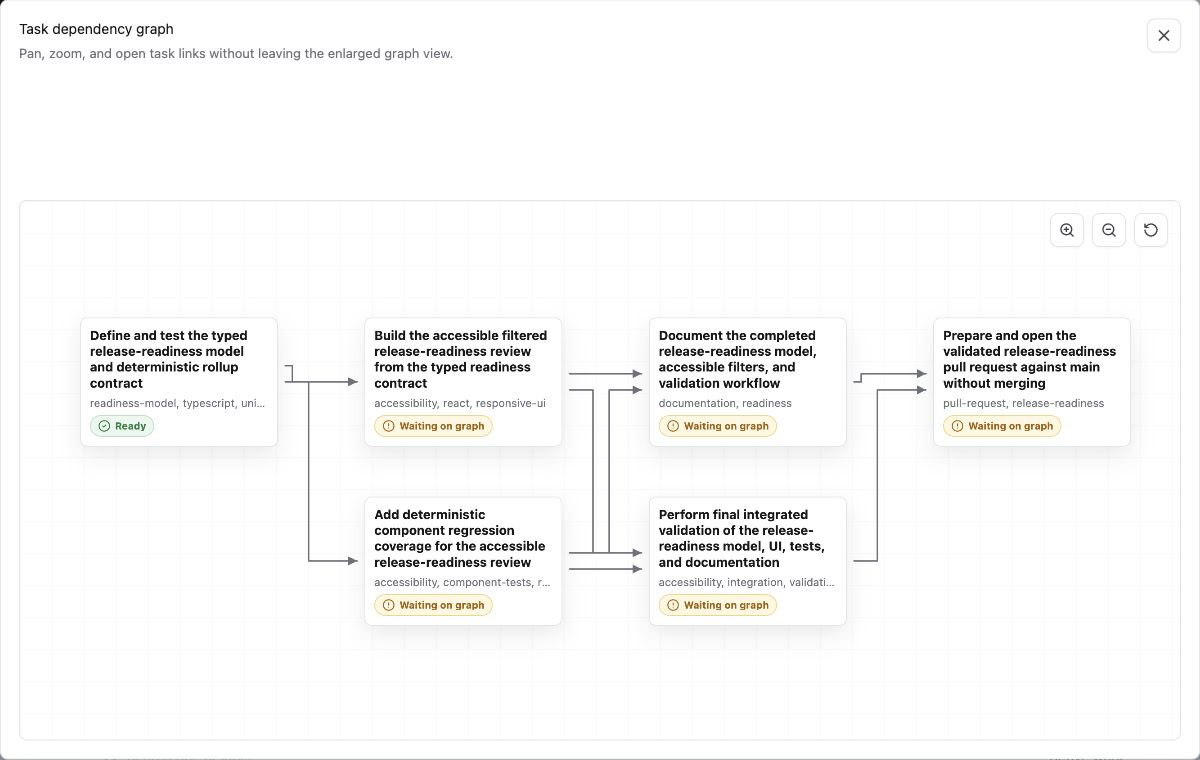
The approved graph starts with the typed model, fans out into interface and regression work, joins for documentation and validation, then finishes with pull-request preparation.
Captured from the Labor0 Demo project.
02 · Running
Run only ready work
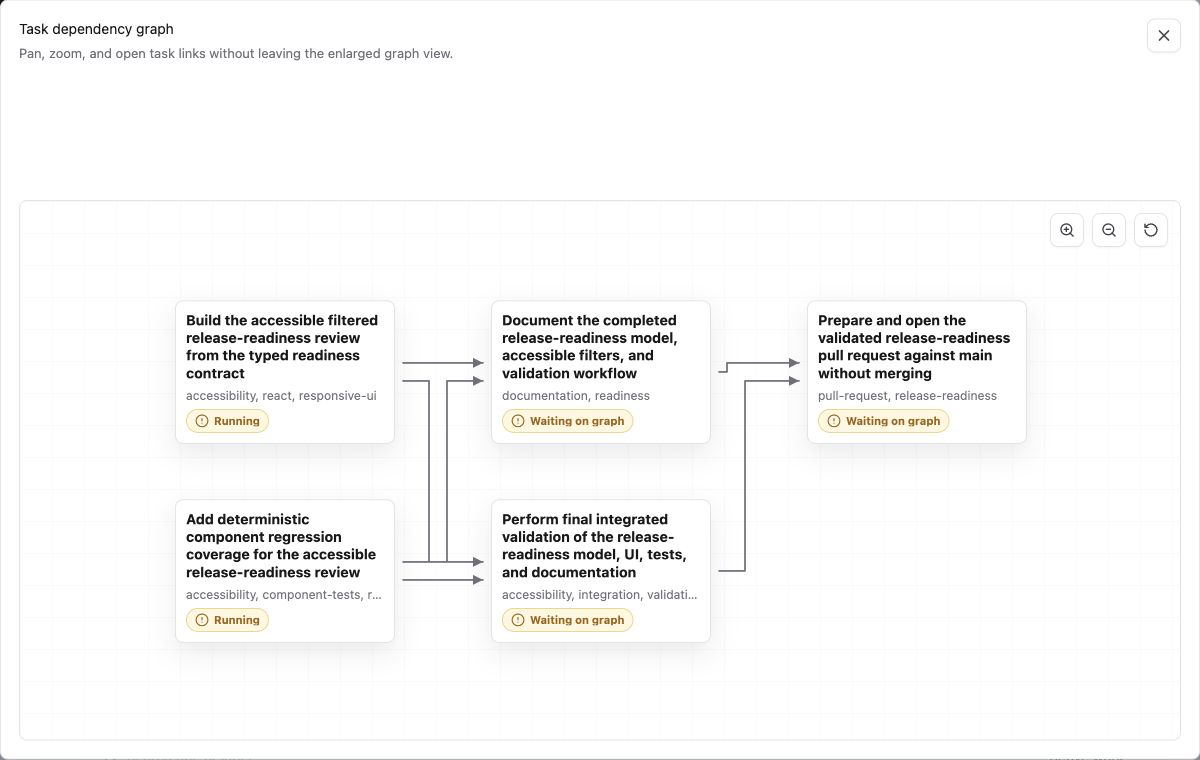
After the model completes, the interface and regression nodes run in parallel while documentation, validation, and pull-request preparation remain gated.
Captured from the Labor0 Demo project.
03 · Review
Finish with reviewable evidence
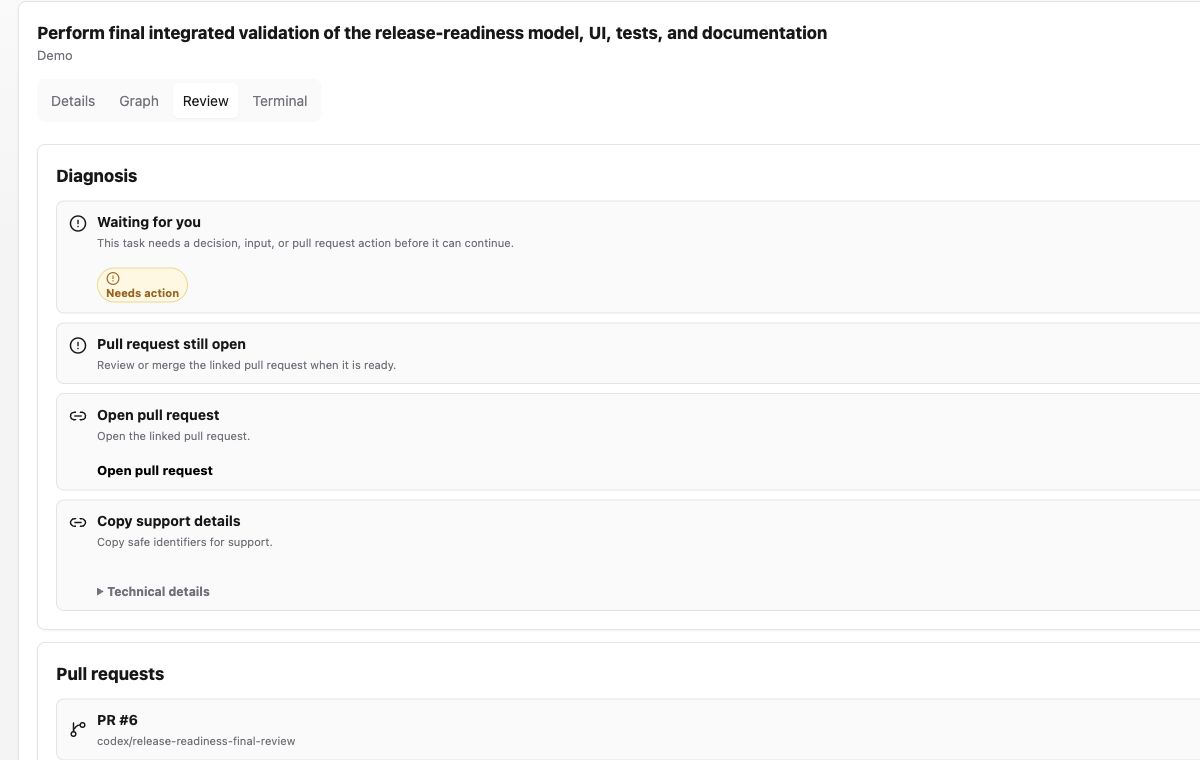
The validated run stops at the human review gate with pull request 6 open, approved, and ready for a merge decision.
Captured from the Labor0 Demo project.
Task graph and dependencies
The visual graph has a text equivalent.
The ordered list preserves every node and predecessor relationship for readers who do not use the screenshot.
Define and test the typed release-readiness model and deterministic rollup contract
Depends on: No predecessor
Build the accessible filtered release-readiness review from the typed readiness contract
Depends on: Define and test the typed release-readiness model and deterministic rollup contract
Add deterministic component regression coverage for the accessible release-readiness review
Depends on: Define and test the typed release-readiness model and deterministic rollup contract
Document the completed release-readiness model, accessible filters, and validation workflow
Depends on: Build the accessible filtered release-readiness review from the typed readiness contract; Add deterministic component regression coverage for the accessible release-readiness review
Perform final integrated validation of the release-readiness model, UI, tests, and documentation
Depends on: Build the accessible filtered release-readiness review from the typed readiness contract; Add deterministic component regression coverage for the accessible release-readiness review
Prepare and open the validated release-readiness pull request against main without merging
Depends on: Document the completed release-readiness model, accessible filters, and validation workflow; Perform final integrated validation of the release-readiness model, UI, tests, and documentation